Category: Workouts & Training

  • 10 Proven Muscle Building Techniques: Achieve Gains Faster with Science-Backed Methods

    10 Proven Muscle Building Techniques: Achieve Gains Faster with Science-Backed Methods

    Building muscle is a science as much as it is an art. To effectively construct a more muscular physique, a combination of proper nutrition, rigorous training, ample recovery, and lifestyle adjustments is essential. Here, we delve into ten scientifically-backed methods that will help you accelerate muscle gains and ensure sustainable progress.

    1. Progressive Overload

    Principle: The foundational principle of muscle building is progressive overload. This involves gradually increasing the weight, frequency, or number of repetitions in your strength training routine.

    Science: Muscle fibers respond to stress by adapting and growing stronger. By consistently challenging your muscles with progressive overload, you encourage hypertrophy (muscle growth). A 2017 study published in the "Journal of Strength and Conditioning Research" confirmed that progressive overload leads to greater muscle hypertrophy over time.

    Implementation: Start with a weight that challenges you but allows you to complete your target reps with good form. Incrementally increase the weight or volume as your strength improves.

    2. Compound Movements

    Principle: Compound exercises engage multiple muscle groups and joints at once, making them highly efficient for overall muscle development.

    Science: Research has shown that compound movements stimulate greater hormonal responses, particularly in boosting testosterone and growth hormone levels, which are vital for muscle growth. A 2018 study in "Sports Medicine" found that multi-joint exercises like squats, deadlifts, and bench presses maximize hypertrophy and functional strength gains.

    Implementation: Incorporate movements like squats, deadlifts, bench presses, rows, and pull-ups into your routine. Aim for 2-3 compound exercises per workout.

    3. Optimal Protein Intake

    Principle: Protein is the building block of muscles, essential for repair and growth.

    Science: A meta-analysis in the "British Journal of Sports Medicine" (2018) recommends consuming 1.6 to 2.2 grams of protein per kilogram of body weight for optimal muscle gain. This range helps ensure your body has the necessary amino acids to repair and build muscle.

    Implementation: Spread your protein intake throughout the day, with meals and post-workout shakes including quality sources like lean meats, dairy, legumes, and protein supplements.

    4. Adequate Rest and Recovery

    Principle: Muscles don’t grow during workouts; they grow during recovery.

    Science: Studies indicate that muscles need 48-72 hours to recover fully from heavy training. Insufficient rest can lead to overtraining, diminished performance, and increased injury risk. Sleep is also critical; research in the "Journal of Clinical Sleep Medicine" (2015) shows that inadequate sleep impairs muscle recovery and growth.

    Implementation: Ensure each muscle group gets at least 48 hours of rest before being trained again. Aim for 7-9 hours of quality sleep each night to optimize recovery.

    5. Progressive Variability

    Principle: While consistent training is important, incorporating variety can prevent plateaus and stimulate muscle growth.

    Science: A 2019 study from the "European Journal of Applied Physiology" demonstrated that varying the exercises, sets, and reps can enhance muscle adaptation and growth by continuously challenging the neuromuscular system.

    Implementation: Change up your routine every 4-6 weeks. Alternate between different exercises, rep ranges (e.g., 6-8 for strength, 8-12 for hypertrophy), and even different grips or stances.

    6. Nutrition Timing

    Principle: When you eat can be nearly as important as what you eat.

    Science: Consumption of protein and carbohydrates shortly after a workout can maximize muscle protein synthesis and replenish glycogen stores. Research in "Nutrients" (2020) supports the anabolic window theory, recommending post-workout nutrition within 30-60 minutes after exercise.

    Implementation: Have a balanced post-workout meal or shake that includes both protein (20-40 grams) and carbohydrates (40-80 grams) to expedite recovery and muscle growth.

    7. Proper Hydration

    Principle: Water plays a critical role in overall health, including muscle function and recovery.

    Science: Dehydration can significantly impair physical performance and reduce muscle protein synthesis. A review in "Nutrition Reviews" (2019) emphasizes the importance of staying hydrated for optimizing muscle function.

    Implementation: Drink at least 3 liters of water per day, and more if you’re sweating heavily. Observe urine color as a simple hydration gauge; aim for light yellow.

    8. Prioritizing Form and Technique

    Principle: Proper exercise form maximizes efficiency and minimizes injury risk.

    Science: Poor technique can lead to inefficient workouts and injury, halting progress. The American Council on Exercise highlights that proper biomechanics are crucial for optimal muscle activation and reducing undue stress on joints.

    Implementation: Focus on mastering the correct form before increasing weights. Consider working with a certified trainer to ensure your technique is sound.

    9. Strategic Supplementation

    Principle: Supplements can fill nutritional gaps and enhance muscle-building efforts.

    Science: Several supplements have strong backing for their efficacy. Creatine, for instance, has been well-documented to increase muscle mass and strength (Journal of the International Society of Sports Nutrition, 2017). Branched-chain amino acids (BCAAs) are also effective for reducing muscle soreness and accelerating recovery.

    Implementation: Incorporate evidence-based supplements like whey protein for post-workout nutrition, creatine (5 grams daily), and BCAAs if you engage in prolonged or intense workout sessions.

    10. Mind-Muscle Connection

    Principle: Focusing on the muscle you’re working can lead to better activation and growth.

    Science: Studies, such as one published in the "Journal of Strength and Conditioning Research" (2018), have shown that a strong mind-muscle connection can enhance muscle activation during training, leading to better gains.

    Implementation: Concentrate on the muscle being targeted, feeling the contraction and full range of motion. Visualization and attentiveness can help engage the muscle more effectively.

    Conclusion

    Building muscle efficiently requires a holistic approach that incorporates scientifically-proven methods. By focusing on progressive overload, incorporating compound movements, optimizing protein intake, and prioritizing proper recovery, you can ensure steady and significant gains. Remember, variability, nutrition timing, hydration, good form, strategic supplementation, and a strong mind-muscle connection are all crucial components. Apply these ten techniques consistently, and you’ll see your muscle-building efforts pay off faster and more effectively.

    #ChatGPT assisted in the creation of this article.

  • Unleash Your Fitness Potential: A Comprehensive Guide to HIIT Exercises for Optimal Health

    Unleash Your Fitness Potential: A Comprehensive Guide to HIIT Exercises for Optimal Health

    In today’s fast-paced world, finding the time to maintain an effective fitness routine can be challenging. High-Intensity Interval Training, or HIIT, offers a solution that promises maximum results in minimal time. This comprehensive guide will delve into the intricacies of HIIT, its benefits, and how you can incorporate it into your fitness regimen to unleash your full potential.

    What is HIIT?

    High-Intensity Interval Training (HIIT) is a form of cardiovascular exercise that alternates between short bursts of intense activity and brief recovery periods. Typically, a HIIT session combines multiple rounds of high-intensity exercises, such as sprints or burpees, with periods of rest or low-intensity exercises like walking or stretching. Unlike traditional steady-state cardio, HIIT aims to push your body to its limits during the high-intensity phases, which leads to more efficient calorie burning and improved overall fitness.

    The Science Behind HIIT

    The effectiveness of HIIT is backed by multiple scientific studies. One key principle is Excess Post-exercise Oxygen Consumption (EPOC), which refers to the increased rate of oxygen intake following strenuous activity. EPOC boosts metabolism and calorie burn even after the workout is over, making HIIT a highly efficient exercise format.

    Furthermore, HIIT improves both aerobic and anaerobic fitness. Aerobic exercises involve prolonged use of muscles at low intensity (e.g., running), while anaerobic exercises involve short bursts of high-intensity efforts (e.g., sprinting). By combining these, HIIT enhances cardiovascular health, musculoskeletal strength, and endurance.

    Benefits of HIIT

    1. Time-Efficiency

    One of the most attractive features of HIIT is its time efficiency. Studies suggest that a 20-minute HIIT workout can yield the same benefits as a 60-minute moderate-intensity exercise. This makes HIIT ideal for people with busy schedules.

    2. Improved Cardiovascular Health

    HIIT significantly boosts cardiovascular health by increasing heart rate and improving blood circulation. It strengthens the heart and can reduce blood pressure, ultimately lowering the risk of cardiovascular diseases.

    3. Burns Fat Quickly

    HIIT elevates your metabolic rate for hours after your workout. This “afterburn” effect leads to more effective fat burning and weight loss compared to traditional steady-state cardio.

    4. Builds Muscle and Strength

    While HIIT is primarily cardio-focused, it often incorporates bodyweight exercises like squats, push-ups, and burpees that help in building muscle and improving strength.

    5. Improves Mental Health

    Exercise is well-known for its mental health benefits, and HIIT is no exception. The intense physical exertion releases endorphins, reducing stress and anxiety while improving mood and cognitive function.

    Types of HIIT Exercises

    Here are some effective HIIT exercises that can be easily modified depending on your fitness level:

    1. Sprints

      • Warm-up for 5 minutes with light jogging.
      • Sprint for 30 seconds at maximum effort.
      • Walk or jog for 90 seconds.
      • Repeat for 8-10 rounds.

    2. Bodyweight Circuit

      • Jump Squats: 20 seconds on, 10 seconds rest.
      • Push-ups: 20 seconds on, 10 seconds rest.
      • Burpees: 20 seconds on, 10 seconds rest.
      • Jumping Jacks: 20 seconds on, 10 seconds rest.
      • Repeat this circuit for 4 rounds.

    3. Tabata Training

      • Exercise for 20 seconds at full effort, then rest for 10 seconds.
      • Repeat this cycle for 8 rounds (4 minutes total).
      • Common Tabata exercises include kettlebell swings, mountain climbers, and high knees.

    4. Stationary Bike Intervals

      • Pedal for 30 seconds at maximum effort.
      • Pedal slowly for 60 seconds.
      • Repeat for 20 minutes.

    Structuring Your HIIT Workout

    Creating a balanced HIIT workout involves several factors:

    Warm-up

    Spend at least 5-10 minutes warming up your muscles to prevent injuries. This can include dynamic stretches, light jogging, or jumping jacks.

    Intensity

    Each high-intensity interval should be performed at 85-95% of your maximum effort. The rest intervals should allow partial recovery while keeping your heart rate elevated.

    Duration

    A typical HIIT session should last between 15-30 minutes, including warm-up and cool-down. This makes it easily adaptable to fit into any schedule.

    Frequency

    For optimal results, aim to incorporate HIIT workouts 2-3 times a week. Ensure at least one day of rest between sessions to allow your body to recover.

    Cool-down

    Finish your workout with a 5-10 minute cool-down phase, including static stretches to relax your muscles and bring your heart rate back to normal.

    Safety Tips

    1. Start Slow: If you’re new to exercise or haven’t worked out in a while, start with moderate intervals and gradually increase your intensity.

    2. Listen to Your Body: HIIT is demanding, so it’s crucial to listen to your body and avoid overexertion. If you feel dizzy, nauseous, or unusually fatigued, stop immediately.

    3. Stay Hydrated: Drink plenty of water before, during, and after your workout to stay hydrated.

    Conclusion

    High-Intensity Interval Training is a powerful workout strategy that can fit seamlessly into even the busiest schedules. Its benefits span from improved cardiovascular health and efficient calorie burning to enhanced muscle strength and mental well-being. By incorporating HIIT into your fitness routine, you can unlock your full fitness potential and achieve optimal health.

    What are you waiting for? Embrace the power of HIIT and take your fitness journey to the next level today!

    #ChatGPT assisted in the creation of this article.
  • Transform Your Fitness Routine: Top 10 Bodyweight Exercises for Optimal Strength and Flexibility

    Transform Your Fitness Routine: Top 10 Bodyweight Exercises for Optimal Strength and Flexibility

    In today’s fast-paced world, finding the time, space, and resources to exercise can be challenging. However, transforming your fitness routine doesn’t necessarily require a gym membership or fancy equipment. Bodyweight exercises are an efficient and effective way to build strength and flexibility using nothing more than your own body. Here, we’ll explore the top 10 bodyweight exercises that can help you achieve optimal fitness.

    1. Push-Ups

    Muscles Targeted

      • Chest
      • Shoulders
      • Triceps
      • Core

    Push-ups are a classic bodyweight exercise that primarily targets the upper body while engaging the core for stability. They come in various forms to suit different fitness levels, such as knee push-ups for beginners and diamond push-ups for advanced athletes.

    How to Perform

      1. Start in a high plank position with your hands slightly wider than shoulder-width apart.
      1. Lower your body until your chest almost touches the floor.
      1. Push back up to the starting position.
      1. Repeat for 10-15 reps.

    2. Squats

    Muscles Targeted

      • Quadriceps
      • Hamstrings
      • Glutes
      • Core

    Squats are essential for lower body strength and stability. They also enhance flexibility in your hips and ankles.

    How to Perform

      1. Stand with your feet shoulder-width apart.
      1. Lower your body into a sitting position, keeping your chest up and knees over your toes.
      1. Push through your heels to return to a standing position.
      1. Repeat for 12-15 reps.

    3. Plank

    Muscles Targeted

      • Core (Rectus abdominis, transverse abdominis)
      • Shoulders
      • Glutes

    The plank is a fundamental core exercise that helps improve overall core stability and strength.

    How to Perform

      1. Start in a push-up position, then bend your elbows and rest your weight on your forearms.
      1. Keep your body in a straight line from head to heels.
      1. Hold the position for 30-60 seconds.

    4. Burpees

    Muscles Targeted

      • Full body

    Burpees are an intense full-body exercise that combines strength and cardio.

    How to Perform

      1. Start in a standing position.
      1. Drop into a squat and place your hands on the ground.
      1. Kick your feet back into a plank position.
      1. Perform a push-up.
      1. Jump your feet back to the squat position.
      1. Explosively jump into the air.
      1. Repeat for 10-12 reps.

    5. Lunges

    Muscles Targeted

      • Quadriceps
      • Hamstrings
      • Glutes
      • Core

    Lunges are great for building lower body strength and stability, while also enhancing hip flexibility.

    How to Perform

      1. Stand upright with your feet together.
      1. Take a step forward with one leg and lower your body until your front thigh is parallel to the ground.
      1. Push back up to the starting position.
      1. Alternate legs and repeat for 10-12 reps per leg.

    6. Bicycle Crunches

    Muscles Targeted

      • Rectus abdominis
      • Obliques

    Bicycle crunches are effective for targeting the entire abdominal area, especially the oblique muscles.

    How to Perform

      1. Lie flat on your back with your hands behind your head.
      1. Lift your legs to a tabletop position.
      1. Simultaneously bring one knee towards your chest while twisting your torso to bring the opposite elbow towards the knee.
      1. Switch sides and repeat for 15-20 reps per side.

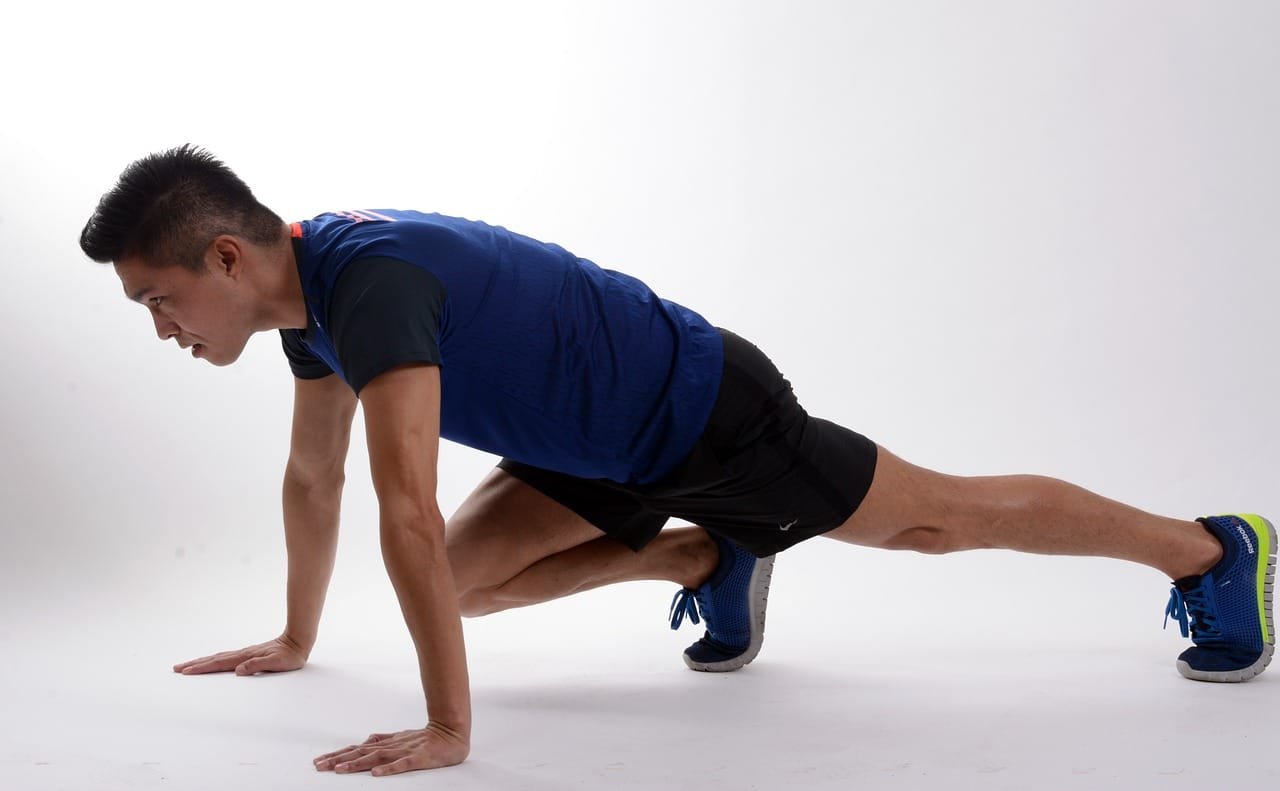
    7. Mountain Climbers

    Muscles Targeted

      • Core
      • Shoulders
      • Quadriceps

    Mountain climbers provide a full-body workout with a strong cardio element, enhancing both strength and endurance.

    How to Perform

      1. Start in a plank position.
      1. Quickly bring one knee towards your chest while keeping the other leg extended.
      1. Switch legs in a running motion.
      1. Continue for 30-60 seconds.

    8. Glute Bridges

    Muscles Targeted

      • Glutes
      • Hamstrings
      • Lower back

    Glute bridges are excellent for strengthening the posterior chain and improving lower body flexibility.

    How to Perform

      1. Lie on your back with your knees bent and feet flat on the ground.
      1. Lift your hips towards the ceiling, squeezing your glutes at the top.
      1. Lower your hips back to the starting position.
      1. Repeat for 12-15 reps.

    9. Pike Push-Ups

    Muscles Targeted

      • Shoulders
      • Triceps
      • Upper chest

    Pike push-ups are a challenging variation of the standard push-up that focuses more on the shoulder muscles.

    How to Perform

      1. Start in a downward dog position.
      1. Lower the top of your head towards the ground by bending your elbows.
      1. Push back up to the starting position.
      1. Repeat for 10-12 reps.

    10. Side Plank

    Muscles Targeted

      • Obliques
      • Shoulders
      • Core

    Side planks are great for targeting the oblique muscles and improving overall core stability.

    How to Perform

      1. Lie on one side with your legs stacked and your elbow directly under your shoulder.
      1. Lift your hips off the ground, forming a straight line from head to feet.
      1. Hold for 30-60 seconds, then switch sides.

    Conclusion

    Incorporating these top 10 bodyweight exercises into your fitness routine will not only help you build strength but also improve your flexibility and overall functional fitness. The beauty of bodyweight exercises is their simplicity and versatility—you can perform them anywhere, anytime. Remember, consistency is key. Challenge yourself progressively and listen to your body to avoid injury. Happy training!

    #ChatGPT assisted in the creation of this article.

  • 10 Effective Home Workouts for All Fitness Levels to Boost Your Health and Save Time

    10 Effective Home Workouts for All Fitness Levels to Boost Your Health and Save Time

    In recent years, home workouts have surged in popularity, driven by a need for convenience, flexibility, and efficiency. Whether you’re a seasoned fitness enthusiast or a beginner, you can tailor an effective workout regimen that fits seamlessly into your daily routine. This article will walk you through ten powerful home workouts suitable for all fitness levels, promising to boost your health while saving you time and money.

    1. Bodyweight Strength Training

    Bodyweight exercises are fundamental yet highly effective for building strength. They require no equipment and can be modified to suit any fitness level.

    Beginner:

    • Push-Ups (Modified): Use your knees if needed, aiming for 10-15 reps.
    • Squats: Perform 15-20 bodyweight squats.
    • Plank: Hold for 20-30 seconds.

    Intermediate:

    • Standard Push-Ups: Aim for 15-20 reps.
    • Lunges: 10-15 reps per leg.
    • Side Plank: Hold each side for 20-30 seconds.

    Advanced:

    • Single-Leg Squats (Pistol Squats): 8-10 reps per leg.
    • Spider Push-Ups: 10-15 reps.
    • Plank Variations: Try forearm plank, plank jacks, or plank with arm/leg raise.

    2. High-Intensity Interval Training (HIIT)

    HIIT workouts are fast, effective, and versatile, combining short bursts of intense exercise with periods of rest or low-intensity exercise.

    Beginner:

    • Jumping Jacks: 20 seconds of work, 40 seconds rest. Repeat for 10 minutes.
    • Mountain Climbers: 20 seconds work, 40 seconds rest. Continue for 10 minutes.

    Intermediate:

    • Burpees: 30 seconds of work, 30 seconds rest. Repeat for 15 minutes.
    • High Knees: 30 seconds work, 30 seconds rest. Continue for 15 minutes.

    Advanced:

    • Sprint Intervals: 40 seconds sprint, 20 seconds rest. Repeat for 20 minutes.
    • Tuck Jumps: 40 seconds work, 20 seconds rest. Continue for 20 minutes.

    3. Yoga and Flexibility Training

    Yoga promotes strength, flexibility, and mental well-being. It can cater to all fitness levels due to its scalable nature.

    Beginner:

    • Cat-Cow Stretch: Flow between poses for 1-2 minutes.
    • Child’s Pose: Hold for 2-3 minutes.
    • Downward Dog: Hold for 1-2 minutes.

    Intermediate:

    • Warrior II: Hold for 1 minute on each side.
    • Triangle Pose: 1 minute on each side.
    • Seated Forward Bend: Hold for 2-3 minutes.

    Advanced:

    • Crow Pose: Hold for as long as you can maintain balance.
    • King Pigeon Pose: Hold for 2 minutes each side.
    • Wheel Pose: Hold for 1 minute.

    4. Core Strengthening Exercises

    A strong core is crucial for overall fitness. These exercises focus on your abdomen and lower back muscles.

    Beginner:

    • Traditional Crunches: 10-15 reps.
    • Leg Raises: 10-15 reps.
    • Bicycle Crunches: 20 reps.

    Intermediate:

    • Russian Twists: 20 twists (10 each side).
    • Plank with Shoulder Tap: 10 taps each side.
    • Flutter Kicks: 30 seconds.

    Advanced:

    • Dragon Flags: 5-10 reps.
    • Hanging Leg Raises: 10-15 reps.
    • Ab Rollouts: 10-15 reps.

    5. Cardio Workouts

    Cardio exercises elevate your heart rate and are essential for cardiovascular health.

    Beginner:

    • Walking/Jogging in Place: 15-20 minutes.
    • Step-Ups: 10-15 reps per leg on a sturdy chair or step.

    Intermediate:

    • Jump Rope: 10-15 minutes.
    • Butt Kicks: 1 minute.

    Advanced:

    • Stair Climbing: 20 minutes.
    • Skater Jumps: 1 minute.

    6. Pilates

    Pilates focuses on core strength, flexibility, and overall body conditioning.

    Beginner:

    • The Hundred: 10 cycles of 5 inhales and 5 exhales.
    • Roll-Downs: 5 reps.

    Intermediate:

    • Single-Leg Stretch: 10 reps per leg.
    • Double-Leg Stretch: 10 reps.

    Advanced:

    • Teaser: 10 reps.
    • Swan: 5 reps.

    7. Resistance Band Training

    Resistance bands are a great tool for strength training, offering different levels of resistance.

    Beginner:

    • Bicep Curls: 10-15 reps.
    • Band Squats: 15-20 reps.

    Intermediate:

    • Overhead Press: 10-15 reps.
    • Lateral Band Walks: 15 steps in each direction.

    Advanced:

    • Band Deadlifts: 15 reps.
    • Band Chest Press: 15 reps.

    8. Dance Workouts

    Dancing is a fun and effective way to improve cardiovascular health, coordination, and flexibility.

    Beginner:

    • Follow Simple Dance Routines: 20-30 minutes from YouTube or dance fitness platforms.

    Intermediate:

    • Incorporate More Complex Dance Styles: 30-45 minutes (Zumba, Hip-Hop).

    Advanced:

    • Freestyle or Structured Intensive Dance Sessions: 45-60 minutes.

    9. Functional Training

    Functional training improves everyday movement, making daily activities easier and more efficient.

    Beginner:

    • Sit-to-Stand: 15 reps.
    • Wall Push-Ups: 15-20 reps.

    Intermediate:

    • Kettlebell Swings: 20 reps.
    • Medicine Ball Slams: 15 reps.

    Advanced:

    • Turkish Get-Ups: 5 reps per side.
    • Single-Leg Deadlift: 15 reps per side.

    10. Mind-Body Connection Fitness

    Mind-body exercises like Tai Chi and Qigong enhance physical and mental health through gentle, flowing movements.

    Beginner:

    • Basic Tai Chi Moves: 10-15 minutes.
    • Simple Qigong Breathing Exercises: 10 minutes.

    Intermediate:

    • Longer Tai Chi Sessions: 20-30 minutes.
    • Intermediate Qigong Routines: 20 minutes.

    Advanced:

    • Advanced Tai Chi Forms: 30-40 minutes.
    • Advanced Qigong Movements: 30 minutes.

    Conclusion

    Whether you’re a rookie or a pro, there’s a home workout tailored to your fitness level and goals. These ten effective home workouts cater to varying degrees of difficulty, ensuring that you can evolve and progress over time. Incorporating these into your weekly routine will not only boost your health but also save you the time and hassle of commuting to a gym. Now, there’s no reason to put off your fitness journey—start today and witness the transformation in your health and well-being.

    #ChatGPT assisted in the creation of this article.
  • Transform Your Body: Top 10 Fitness Challenges That Guarantee Results in 30 Days

    Transform Your Body: Top 10 Fitness Challenges That Guarantee Results in 30 Days

    When it comes to fitness, many are on the lookout for quick yet effective methods to embark on a transformational journey. Whether your goal is to lose weight, build muscle, or simply develop a healthier lifestyle, a 30-day fitness challenge can provide structure, motivation, and measurable results. But with numerous options available, how do you determine which challenges genuinely deliver? Let’s dive into the top 10 fitness challenges that guarantee results in just 30 days.

    1. The Plank Challenge

    Objective: Enhance core strength and stability.

    Structure: This challenge involves progressively extending the duration you hold a plank position each day. Start with 20 seconds and aim to reach a 5-minute plank by day 30.

    Why It Works: Planking works your entire core, including the transverse abdominis, rectus abdominis, and obliques, in addition to engaging the shoulders and glutes. As you advance, not only does your endurance elevate, but your posture and overall core stability improve significantly.

    2. The Squat Challenge

    Objective: Sculpt and strengthen legs and glutes.

    Structure: Beginning with 50 squats on day one, participants increase the count by 5 squats daily, culminating in 250 squats on day 30.

    Why It Works: Squats target multiple muscle groups in the lower body, including the quadriceps, hamstrings, glutes, and calves. Enhanced lower body strength can improve overall mobility and support better performance in other exercises.

    3. The Push-Up Challenge

    Objective: Build upper body strength and endurance.

    Structure: Start at a manageable number, such as 10 push-ups. Increase the count by 2 each day, aiming to achieve 60 push-ups in one go by the end of the month.

    Why It Works: Push-ups are a compound exercise that engages the chest, shoulders, triceps, and core. They enhance muscle endurance, boost cardiovascular health, and improve body composition.

    4. The Burpee Challenge

    Objective: Increase cardiovascular fitness and full-body strength.

    Structure: Begin with 5 burpees and add one more each day. By day 30, you should be able to perform 35 nonstop.

    Why It Works: Burpees are a high-intensity, full-body exercise that elevates the heart rate, burns substantial calories, and engages multiple muscle groups simultaneously, including core strength.

    5. The Running Challenge

    Objective: Boost cardiovascular health and stamina.

    Structure: This challenge involves a combination of progressive distance and speed. Start with 1 mile at a comfortable pace. Gradually increase the distance or speed daily, aiming to run 3-5 miles comfortably by day 30.

    Why It Works: Running is an excellent cardiovascular exercise that strengthens the heart, burns calories, improves lung function, and enhances mental health through the release of endorphins.

    6. The Yoga Flexibility Challenge

    Objective: Increase flexibility and reduce stress.

    Structure: Dedicate 20-30 minutes each day to a series of yoga poses focusing on various parts of the body. As the month progresses, incorporate more challenging poses.

    Why It Works: Yoga improves flexibility, strength, and balance while reducing stress and enhancing mental clarity. Regular practice can lead to better overall physical alignment and relief from muscle tension.

    7. The HIIT (High-Intensity Interval Training) Challenge

    Objective: Burn fat and enhance cardiovascular efficiency.

    Structure: Perform a variety of HIIT workouts, starting at 15 minutes, three times a week. Gradually extend to 30-minute sessions by the end of 30 days.

    Why It Works: HIIT alternates between short bursts of intense activity and rest or low-intensity exercise, keeping the heart rate elevated. This method is highly effective for burning calories and fat while improving aerobic and anaerobic fitness levels.

    8. The Walking Challenge

    Objective: Improve overall fitness and encourage daily activity.

    Structure: Begin with a 20-minute walk each day, increasing by 5 minutes every week. Aim to walk briskly for 60 minutes by day 30.

    Why It Works: Walking is a low-impact, accessible form of exercise that enhances cardiovascular health, improves mood, supports weight management, and increases stamina.

    9. The Full-Body Strength Training Challenge

    Objective: Build muscle and improve body composition.

    Structure: Engage in a full-body strength workout, incorporating exercises such as squats, lunges, push-ups, pull-ups, and deadlifts. Begin with lighter weights and aim to increase the load or number of repetitions weekly.

    Why It Works: Strength training builds muscle mass and increases metabolic rate, helping you burn more calories at rest. It also strengthens bones, improves joint function, and enhances overall physical performance.

    10. The Hydration and Nutrition Challenge

    Objective: Complement physical activity with proper nutrition and hydration.

    Structure: Aim to drink a minimum of 2 liters of water daily and incorporate a balanced diet rich in lean proteins, whole grains, fruits, and vegetables. Eliminate processed foods and reduce sugar intake.

    Why It Works: Proper hydration and nutrition are critical to any fitness regimen. Hydration assists in muscle recovery, energy levels, and metabolic functions. Adequate nutrition provides the necessary fuel for workouts and aids in muscle repair and growth.

    Integrating Challenges for Maximum Results

    To maximize results, consider integrating several of these challenges into your routine. For example, combining strength training with HIIT workouts and daily hydration will provide a holistic approach to fitness, targeting different aspects of physical health. Remember, the key to success lies in consistency and proper form.

    Conclusion

    Transforming your body in 30 days is not only possible but also highly rewarding with the right fitness challenges. The outlined top 10 challenges focus on different fitness components, from strength and endurance to flexibility and nutrition, ensuring a comprehensive approach to your fitness journey.

    Before beginning any new fitness challenge, it’s crucial to consult with a healthcare provider or fitness professional, especially if you have any pre-existing conditions or concerns. Embrace the journey with dedication, listen to your body, and witness substantial transformations in just a month. Ready, set, challenge yourself!

    #ChatGPT assisted in the creation of this article.

  • Unlock Your Best Self: Top Fitness Programs for Rapid Results in 2024

    Unlock Your Best Self: Top Fitness Programs for Rapid Results in 2024

    In the ever-evolving world of fitness, 2024 brings an exciting array of innovative programs designed to help you achieve rapid results and unlock your best self. Whether you’re a seasoned athlete or just beginning your fitness journey, these top fitness programs are tailored to accelerate progress, enhance overall well-being, and keep you motivated. Here we dive into the best fitness programs taking the spotlight this year.

    1. High-Intensity Interval Training (HIIT)

    High-Intensity Interval Training, or HIIT, continues to dominate the fitness landscape in 2024. Known for its efficiency and effectiveness, HIIT involves short bursts of intense exercise followed by brief rest periods. This method not only burns a significant amount of calories but also boosts your metabolism for hours after the workout.

    Benefits of HIIT:

    • Time-Efficient: Perfect for busy schedules, workouts can range from 15 to 30 minutes.
    • Increased Caloric Burn: The post-exercise oxygen consumption (EPOC) effect leads to prolonged calorie burn.
    • Versatile: Can be incorporated into cardiovascular, strength, or bodyweight exercises.

    Popular HIIT Programs:

    • F45 Training: Group training focused on functional exercises.
    • OrangeTheory Fitness: Combines cardiovascular and strength training with heart rate monitoring.
    • Les Mills Grit: High-energy team training sessions combining strength, cardio, and HIIT.

    2. Functional Fitness

    Functional fitness shifts the focus from traditional exercises to movements that improve everyday activities. By mimicking real-life actions, these exercises enhance strength, balance, and flexibility, making daily tasks easier and reducing injury risk.

    Benefits of Functional Fitness:

    • Improved Mobility and Stability: Enhances muscle coordination and balance.
    • Reduced Injury Risk: Prepares muscles and joints for daily activities.
    • Enhanced Quality of Life: Optimizes everyday functional movements.

    Notable Functional Fitness Programs:

    • CrossFit: Blends weightlifting, cardio, and functional movements in high-intensity sessions.
    • TRX Suspension Training: Uses bodyweight and gravity for strength and balance training.
    • MoveNat: Focuses on natural movement-based fitness to improve overall bodily function.

    3. Virtual and Online Training

    With technological advancements and the global shift towards remote lifestyles, virtual and online training programs have surged in popularity. These programs offer flexibility, convenience, and a plethora of workout options that can be done from home or anywhere.

    Benefits of Virtual Training:

    • Accessibility: Workouts available anytime, anywhere.
    • Variety: Wide range of classes and programs to suit different fitness levels.
    • Community and Support: Interactive platforms offering community engagement and support.

    Leading Virtual Platforms:

    • Peloton: Live and on-demand classes, including cycling, running, and strength training.
    • Beachbody On Demand: Extensive library of workout programs, including P90X, Insanity, and 21 Day Fix.
    • Aaptiv: Audio-based workouts for running, strength training, and yoga.

    4. Strength Training

    Strength training remains a cornerstone of fitness for its numerous health benefits, including muscle building, fat loss, and improved bone density. 2024 sees a continued emphasis on tailored strength programs that cater to individual goals and needs.

    Benefits of Strength Training:

    • Increased Muscle Mass: Improves body composition and metabolism.
    • Enhanced Bone Health: Reduces the risk of osteoporosis.
    • Boosts Overall Strength: Supports functional and athletic performance.

    Top Strength Training Programs:

    • Starting Strength: Focuses on fundamental barbell exercises to build a solid strength base.
    • StrongLifts 5×5: Simplified and effective program utilizing major compound lifts.
    • Juggernaut Method: Comprehensive strength training program adaptable to different experience levels.

    5. Mind-Body Fitness

    Integrating mental and physical well-being, mind-body fitness programs are gaining traction in 2024. These programs emphasize mindfulness, stress reduction, and holistic health, promoting balance and harmony in life.

    Benefits of Mind-Body Fitness:

    • Reduces Stress: Techniques that calm the mind and reduce anxiety.
    • Increases Flexibility and Balance: Enhances physical stability and range of motion.
    • Promotes Overall Wellness: Fosters a healthy connection between mind and body.

    Popular Mind-Body Programs:

    • Yoga: Various styles like Vinyasa, Ashtanga, and Yin, offering flexibility, strength, and relaxation.
    • Pilates: Focuses on core strength, stability, and controlled movements.
    • Tai Chi: Gentle martial art combining slow, deliberate movements with deep breathing.

    6. Hybrid Workouts

    Hybrid workouts combine elements from different fitness disciplines, creating engaging and multifaceted workout experiences. These workouts keep routines fresh and dynamic while delivering comprehensive fitness benefits.

    Benefits of Hybrid Workouts:

    • Variety: Reduces workout monotony by mixing different exercise styles.
    • Balanced Fitness: Promotes strength, cardio, flexibility, and coordination.
    • Adaptable: Suitable for all fitness levels and preferences.

    Trendy Hybrid Programs:

    • Barry’s Bootcamp: Alternates between high-energy cardio on treadmills and strength training.
    • CorePower Yoga Sculpt: Blends yoga, cardio, and strength with hand weights.
    • Burn Boot Camp: Offers diverse classes incorporating strength training, cardio, and core work.

    7. Personalized Fitness Plans

    Personalization is key in 2024, with programs tailored to individual needs, goals, and preferences. Personalized fitness plans driven by data and technology ensure maximum efficiency and progress.

    Benefits of Personalized Plans:

    • Custom-Tailored: Addresses specific fitness goals and needs.
    • Enhanced Motivation: Keeps individuals engaged with dynamic and relevant workouts.
    • Measurable Progress: Tracks individual improvements for continuous adaptation.

    Examples of Personalized Programs:

    • Future: Offers one-on-one coaching with customized weekly training plans.
    • Fittr: Uses AI to craft personalized workout and nutrition plans.
    • Nike Training Club: Personalized workouts based on individual fitness data and preferences.

    Conclusion

    2024 ushers in a new era of fitness programs designed for rapid results, diverse experiences, and tailored approaches. From the intensity of HIIT and the functionality of everyday fitness to the accessibility of virtual training and the serenity of mind-body practices, there is something for everyone. Embrace these top fitness trends, stay committed, and unlock your best self with the ideal program that aligns with your goals and lifestyle. Remember, consistency is key, so choose a program that excites and motivates you, and embark on the path to a healthier, happier you.

    #ChatGPT assisted in the creation of this article.

  • Transform Your Body: Effective and Personalized Workout Plans for Every Fitness Level

    Transform Your Body: Effective and Personalized Workout Plans for Every Fitness Level

    In today’s fast-paced world, achieving a fit and healthy body can seem like an insurmountable challenge. With a myriad of workout programs, fitness trends, and dietary plans out there, it’s easy to feel overwhelmed. However, the key to a successful fitness journey lies in personalized workout plans tailored to your individual needs and goals. This guide aims to help you transform your body by providing actionable and effective strategies for every fitness level, from beginners to advanced athletes.

    Getting Started: Understanding Your Fitness Level

    Before diving into a workout regimen, it’s vital to assess your current fitness level. This initial step helps in setting realistic goals and choosing exercises that match your capabilities. Here’s how to gauge where you stand:

      1. Self-Assessment: Use simple tests like a timed mile run, push-up and sit-up counts, and flexibility tests to understand your baseline fitness level.
      1. Professional Evaluation: Consult a healthcare provider or a certified fitness trainer for a more comprehensive evaluation, including body composition analysis and cardiovascular fitness assessment.

    Setting SMART Goals

    Once you know your starting point, it’s essential to set SMART (Specific, Measurable, Achievable, Relevant, Time-bound) goals. For example, instead of saying, “I want to lose weight,” specify, “I aim to lose 10 pounds in 12 weeks by exercising four times a week and following a healthy eating plan.”

    Designing Your Workout Plan

    A personalized workout plan should be well-rounded and consist of the following components:

      1. Warm-Up and Stretching: Begin with at least 5-10 minutes of light cardio (like jogging or jumping jacks) followed by dynamic stretching to prepare your muscles and reduce the risk of injury.
      1. Cardiovascular Training: Essential for heart health and calorie burning. Activities can include running, cycling, swimming, or HIIT (High-Intensity Interval Training).
      1. Strength Training: Incorporate resistance exercises using body weight, free weights, or machines. Focus on compound movements like squats, deadlifts, bench press, and rows, which engage multiple muscle groups.
      1. Flexibility and Mobility: Include yoga or Pilates sessions, or dedicate time to stretch post-workout to improve flexibility and decrease muscle soreness.
      1. Cool Down: Finish your workout with a 5-10 minute cool down period, including static stretching to help muscles recover.

    Beginner’s Workout Plan

    Frequency: 3 days per week

    Cardio (20-30 minutes):

      • Warm-up: 5 minutes brisk walking
      • Main cardio: 15-20 minutes of steady-state cardio (brisk walking or light jogging)
      • Cool down: 5 minutes slow walking

    Strength Training:

      • Squats: 2 sets of 10-15 reps
      • Push-Ups (modified if necessary): 2 sets of 10 reps
      • Dumbbell Rows: 2 sets of 10-12 reps per arm
      • Plank: 2 sets of 20-30 seconds

    Flexibility:

      • Hamstring stretch: 2x 20 seconds per leg
      • Quadriceps stretch: 2x 20 seconds per leg
      • Shoulder stretch: 2x 20 seconds per arm

    Intermediate Workout Plan

    Frequency: 4-5 days per week

    Cardio (30-40 minutes):

      • Warm-up: 5 minutes light jogging
      • Main cardio: 20-30 minutes of moderate-intensity interval training (e.g., alternating 2 minutes of fast running with 2 minutes of walking)
      • Cool down: 5 minutes slow jogging

    Strength Training (split routine):
    Day 1: Upper Body

      • Bench Press: 3 sets of 8-10 reps
      • Bent-Over Rows: 3 sets of 8-10 reps
      • Overhead Press: 3 sets of 8-10 reps
      • Bicep Curls: 3 sets of 10-12 reps
      • Tricep Dips: 3 sets of 10-12 reps

    Day 2: Lower Body

      • Deadlifts: 3 sets of 8-10 reps
      • Lunges: 3 sets of 10-12 reps per leg
      • Leg Press: 3 sets of 10-12 reps
      • Calf Raises: 3 sets of 15 reps

    Flexibility (daily):

      • Incorporate 10-15 minutes of stretching or yoga

    Active Recovery Day:

      • Light yoga or stretching, and a 20-30 minute walk.

    Advanced Workout Plan

    Frequency: 5-6 days per week

    Cardio:

      • Combine steady-state cardio, HIIT, and sport-specific drills for 30-60 minutes daily. Vary intensity and duration to optimize cardiovascular benefits and prevent plateaus.

    Strength Training (advanced split routine):
    Day 1: Push (Chest, Shoulders, Triceps)

      • Incline Bench Press: 4 sets of 6-8 reps
      • Military Press: 4 sets of 6-8 reps
      • Skull Crushers: 3 sets of 10 reps

    Day 2: Pull (Back, Biceps)

      • Pull-Ups: 4 sets to failure
      • Deadlifts: 4 sets of 6-8 reps
      • Barbell Curls: 4 sets of 8-10 reps

    Day 3: Legs

      • Squats: 4 sets of 6-8 reps
      • Romanian Deadlifts: 4 sets of 8-10 reps
      • Leg Extensions: 3 sets of 12-15 reps
      • Glute Bridges: 3 sets of 10 reps

    Day 4: Active Recovery

    Repeat the cycle.

    Flexibility and Mobility:

      • Dedicate 15-20 minutes daily to flexibility training.
      • Include foam rolling and dynamic stretches.

    Nutrition and Recovery

    Nutrition:

      • Balanced diet rich in lean proteins, complex carbs, healthy fats, and ample fruits and vegetables.
      • Stay hydrated by drinking plenty of water throughout the day.
      • Consider consulting with a nutritionist for a personalized meal plan.

    Recovery:

      • Aim for 7-9 hours of sleep per night.
      • Use rest days wisely: light activity, stretching, and foam rolling can enhance recovery.
      • Listen to your body and avoid overtraining to prevent injuries.

    Staying Motivated

    Track Progress:

      • Keep a workout journal or use a fitness app to track your workouts, diet, and progress. Seeing improvements can be highly motivating.

    Variety:

      • Change up your workout routine every 4-6 weeks to keep things interesting and to challenge your body in new ways.

    Support System:

      • Find a workout buddy or join a fitness community to stay accountable and motivated.

    Conclusion

    Transforming your body is a journey that requires commitment, consistency, and a personalized approach. By understanding your fitness level, setting SMART goals, and following a well-rounded workout plan, you can achieve remarkable results. Remember that progress takes time, but with dedication and the right plan, every fitness goal is within reach. Start today, and transform your body one step at a time.

    #ChatGPT assisted in the creation of this article.
  • Unlock Ultimate Fitness: Effective Circuit Training Routines

    Unlock Ultimate Fitness: Effective Circuit Training Routines

    In the ever-evolving landscape of fitness, circuit training has surged in popularity due to its effectiveness, versatility, and time-efficiency. Individuals from varied fitness backgrounds have adopted this dynamic workout style to elevate their fitness levels, burn fat, and build lean muscle. If you’re looking to unlock your ultimate fitness potential, this definitive guide to effective circuit training routines will be your gateway to a healthier, stronger you.

    What Is Circuit Training?

    Circuit training involves performing a series of exercises, or ‘stations’, with minimal rest in between. Each exercise targets different muscle groups, enhancing overall physical fitness, cardiovascular health, and endurance. The idea is to keep your heart rate elevated while engaging multiple areas of the body within a single workout session, making it an excellent option for those seeking a comprehensive fitness routine.

    Benefits of Circuit Training

      1. Improves Cardiovascular Health: The continuous movement and varied exercises keep your heart rate elevated, which enhances cardiovascular fitness.
      1. Efficiency: Circuit training allows you to combine strength and aerobic training, saving time without compromising results.
      1. Versatility: It can be tailored to meet individual fitness levels and goals, whether you are a beginner or an advanced athlete.
      1. Burns More Calories: The high-intensity nature of circuit training can increase calorie burn during and after workouts through a phenomenon known as the afterburn effect.
      1. Builds Muscle and Strength: By incorporating weight and resistance exercises, circuit training promotes muscle growth and strength.

    Designing an Effective Circuit Training Routine

    Creating an effective circuit training routine requires thoughtful planning and consideration of several key factors. Here’s a step-by-step guide to help you get started:

    Step 1: Define Your Goals

    Before you start, determine what you want to achieve. Are you aiming to lose weight, build muscle, enhance endurance, or improve overall fitness? Your goals will shape the exercises and structure of your circuit.

    Step 2: Choose Your Exercises

    Select 6-10 exercises that target different muscle groups. Aim for a mix of upper body, lower body, core, and cardio exercises. Here’s a balanced example:

      • Upper Body: Push-ups, dumbbell presses, rows
      • Lower Body: Squats, lunges, deadlifts
      • Core: Planks, Russian twists, leg raises
      • Cardio: Jumping jacks, burpees, high knees

    Step 3: Structure Your Circuit

    Decide the duration for each exercise and the rest period. A common structure is 30 seconds of work followed by 15 seconds of rest. However, this can be adjusted based on your fitness level and goals. Beginners may start with 20 seconds of work and 20 seconds of rest.

    Step 4: Warm-Up and Cool Down

    Incorporate a warm-up and cool-down in your routine. A 5-10 minute warm-up can include light cardio and dynamic stretches to prepare your body. Similarly, a cool-down with static stretching aids in recovery and prevents injury.

    Step 5: Progress Over Time

    Gradually increase the intensity of your circuits by adding more weight, reducing rest periods, or incorporating more advanced exercises. This ensures continuous progress and avoids plateaus.

    Sample Circuit Training Routine

    Here’s a sample routine for an intermediate fitness level, designed to build strength and endurance:

      1. Warm-Up (5-10 minutes)
          • Light jogging or marching in place
          • Arm circles
          • Leg swings
          • Dynamic stretches
      1. Main Circuit (Repeat 3 times)
          • Jump Squats (30 seconds): Squats with an explosive jump at the top.
          • Rest (15 seconds)
          • Push-Ups (30 seconds): Keep the body straight and lower your chest to the ground.
          • Rest (15 seconds)
          • Burpees (30 seconds): Combination of a squat, push-up, and jump.
          • Rest (15 seconds)
          • Renegade Rows (30 seconds): In a plank position, row each dumbbell towards your hip alternately.
          • Rest (15 seconds)
          • Russian Twists (30 seconds): Sit on the ground, lean back, and twist your torso side to side.
          • Rest (15 seconds)
          • High Knees (30 seconds): Running in place with knees lifted to waist height.
          • Rest (15 seconds)
      1. Cool-Down (5-10 minutes)
          • Child’s pose
          • Standing quad stretch
          • Hamstring stretch
          • Shoulder stretch

    Tips for Success

      1. Consistency: Circuit training should be done 2-3 times per week for noticeable results.
      1. Form Over Speed: Focus on correct form to prevent injuries and ensure effectiveness.
      1. Hydrate and Fuel Properly: Maintain good nutrition and hydration to support your workouts.
      1. Listen to Your Body: Rest as needed and avoid overtraining. Muscle soreness is normal, but pain could indicate an injury.

    Advanced Circuit Training

    For those looking to take their circuit training to the next level, incorporating advanced techniques can add extra challenge and variety. Here are a few ideas:

      • Supersets: Pairing two exercises back-to-back with no rest in between (e.g., push-ups immediately followed by pull-ups).
      • Plyometrics: Adding explosive movements like box jumps, clap push-ups, or depth jumps to improve power and agility.
      • Weighted Circuits: Incorporate weighted vests, kettlebells, or heavier dumbbells to increase resistance.
      • Timed Challenges: Set a timer and aim to complete as many rounds of the circuit as possible within a specific time frame.

    Avoiding Common Pitfalls

    While circuit training is highly beneficial, it’s essential to be aware of potential pitfalls:

      • Overtraining: Ensure adequate rest between workouts to allow muscle recovery.
      • Neglecting Form: Speed can compromise form. Practice new exercises slowly to master the correct technique.
      • Lack of Variety: Changing up exercises periodically prevents adaptation and keeps workouts engaging.

    Conclusion

    Circuit training epitomizes the ultimate fitness regimen for its ability to combine strength, endurance, and cardiovascular conditioning in one time-efficient workout. By following this guide, you can design effective circuit training routines that align with your fitness goals and level. Consistency, proper form, and gradual progression are key to unlocking your ultimate fitness potential through circuit training. So, grab your workout gear, map out your circuit, and prepare to transform your body and health like never before.

    Embrace circuit training, and witness unparalleled strides in your fitness journey. The path to ultimate fitness starts now.

    #ChatGPT assisted in the creation of this article.