Author: Max Strongwell

  • RENRANRING Resistance Bands for Working Out, 150LBS Exercise Bands, Workout Bands, Resistance Bands Set with Handles for Men Women, Legs Ankle Straps for Muscle Training

    RENRANRING Resistance Bands for Working Out, 150LBS Exercise Bands, Workout Bands, Resistance Bands Set with Handles for Men Women, Legs Ankle Straps for Muscle Training


    Price: $29.99 – $21.87
    (as of Nov 11, 2024 05:22:04 UTC – Details)


    Rewrite this amazon product description and add a Pros and Cons section :
    From the brand

    RENRANRING Resistance BandsRENRANRING Resistance Bands

    Resistance Bands Working Out Exercise Bands Physical Therapy Stretch Recovery Pilates Rehab,YogaResistance Bands Working Out Exercise Bands Physical Therapy Stretch Recovery Pilates Rehab,Yoga

    Pilates Bar Kits

    150lbs Resistance Tube Bands

    Elastic Resistance Bands

    Ankle Bands with Cuffs

    Gym Exercise Handles

    Renranring Resistance BandsRenranring Resistance Bands

    Resistance Bands for Working OutResistance Bands for Working Out

    resistance bandsresistance bands

    How did we start?

    The founder of RENRANRING is also a fitness expert who is determined to create a healthy life for users and restore physical vitality, so that you can enjoy health every day.

    What makes our products different?

    We have professional market research, design and testing personnel. Strictly select materials and pay attention to details and quality. Durable and service.

    What makes us love it?

    RENRANRING non latex resistance belt can be used at all ages. It is widely loved by users and is the perfect tool for exercising.

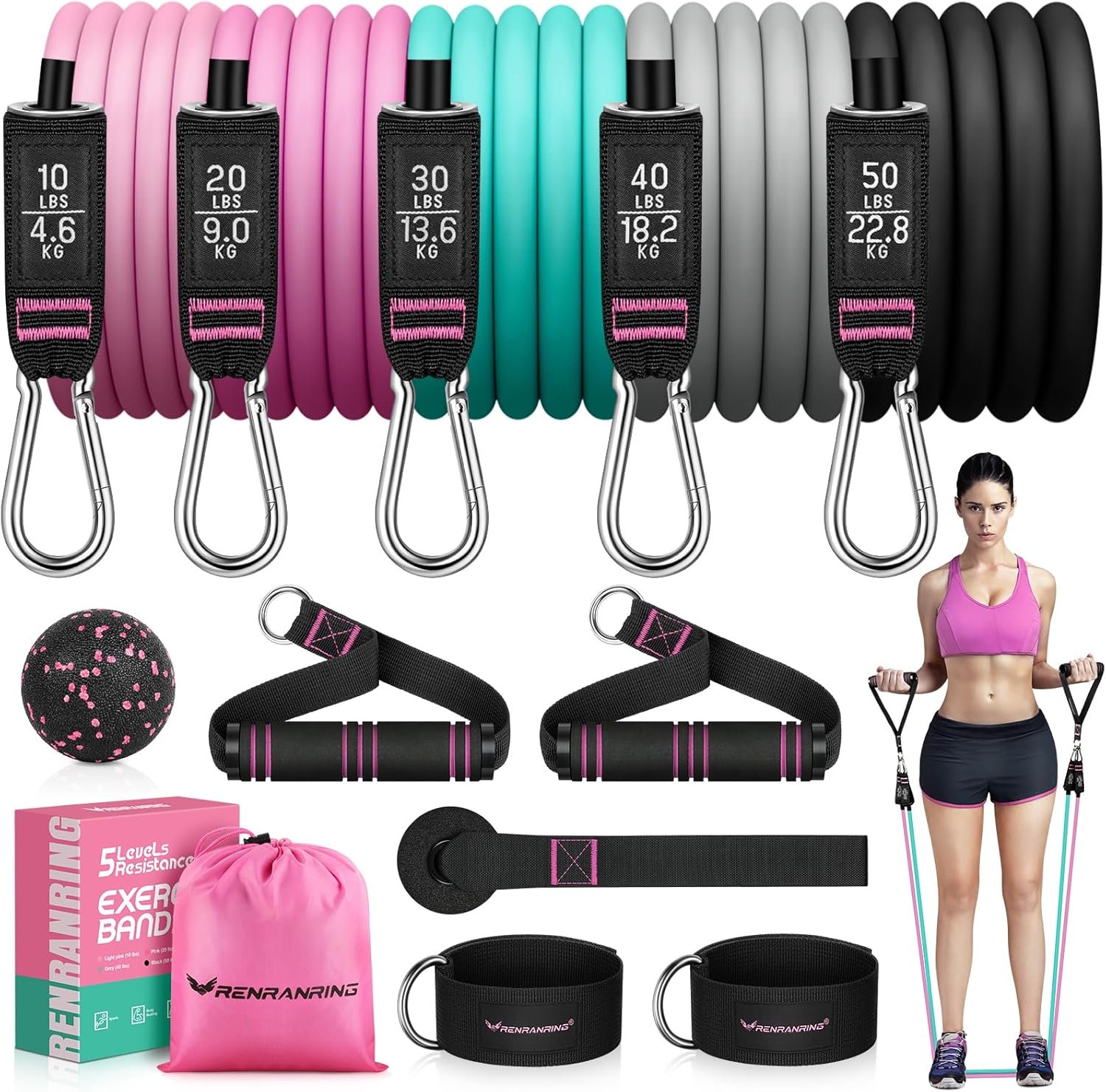
    Adjustable Resistance Bands Set: 5 resistance levels, Pink 10 lbs, Medium pink 20 lbs, Blue 30 lbs, Grey 40 lbs, Black 50 lbs. Stackable exercise bands, both in 51″, maximum resistance is 150 lbs
    Quality Materials and Workmanship: stretch bands made of high quality rubber, good elasticity. strong metal buckle connection to stop breakage. non-slip Handles, Strong wear resistance
    Multiple Workout Cenario: The resistance bands with handles can be great with any popular workout like Pilates. Yoga and Boxing more. Or use them for general exercise, stretching, strength training, Physical Therapy, Shape Body programs
    Portable and Easy To Store: The resistance work out bands suit is easy to carry and comes with a waterproof bag for you. whether at home, in the gym or when traveling, you can all use it to exercise at any time. whether it’s for your own use or as a surprise, it’s your best choice
    Complete Workout Band: You will get 5 resistance bands, 1 door anchor, 2 ankle straps, 2 handles, 1 massage ball, 1 instruction manual and 1 portable storage bag. Multiple and complete accessories allow you to switch up your workout for even more

  • Unlocking the Power of Personalized Nutrition: Top Meal Planning Strategies to Boost Your Fitness Journey

    Unlocking the Power of Personalized Nutrition: Top Meal Planning Strategies to Boost Your Fitness Journey

    In the complex landscape of health and wellness, personalized nutrition emerges as a beacon of hope for individuals seeking to optimize their fitness journey. No longer is the generic, one-size-fits-all dietary advice sufficient. The recognition that each body’s nutritional needs are as unique as fingerprints has ushered in a new era in dietary sciences. In this article, we explore the significance of personalized nutrition and share top meal planning strategies to enhance your fitness journey.

    Understanding Personalized Nutrition

    Personalized nutrition involves tailoring dietary advice to individual characteristics, including genetic makeup, lifestyle, health status, and personal preferences. It’s not just about what you eat, but also when, how, and why you eat. This approach plays an integral role in achieving specific fitness goals, be it weight loss, muscle gain, endurance, or overall health improvement.

    The Science Behind Personalized Nutrition

    The concept of personalized nutrition is rooted in scientific advances in genomics, metabolomics, and microbiome studies. These fields examine how individual genetic variations influence the metabolism of nutrients and can predict responses to specific diets. For example, genetic variants can affect how someone metabolizes fats or carbohydrates, which may influence the risk of obesity, diabetes, or cardiovascular diseases.

    Benefits of Personalized Nutrition

    1. Optimized Nutrient Absorption: By aligning your diet with your genetic profile, you enhance nutrient absorption and utilization, significantly impacting your fitness outcomes.

    2. Sustainable Weight Management: Personalized nutrition enables more effective weight management strategies, as diets can be crafted to leverage strengths and counteract weaknesses in metabolism.

    3. Improved Fitness Performance: Tailored diets help in optimizing energy levels, recovery, and overall performance during physical activities.

    4. Reduced Risk of Chronic Diseases: Personalized nutritional plans can mitigate the risks of lifestyle-related diseases by addressing specific genetic and environmental risk factors.

    Top Meal Planning Strategies

    To leverage the full potential of personalized nutrition, consider these pivotal meal planning strategies:

    1. Know Your Genetic Blueprint

    Begin with understanding your genetic predispositions. Genetic testing can provide insights into how your body responds to various nutrients and reveal potential food intolerances. With this information, you can adjust your macro and micronutrient intake accordingly.

    2. Assess Your Lifestyle Needs

    Consider your daily activity level, sleep patterns, stress levels, and health goals. Meal plans should be adaptable to your lifestyle. For instance, if you’re highly active, you might require more protein and complex carbohydrates to support energy needs and muscle repair.

    3. Incorporate Micro and Macronutrient Balance

    A well-balanced diet includes the right proportions of carbohydrates, proteins, fats, vitamins, and minerals. Personalizing this balance according to your specific genetic and lifestyle needs can tremendously bolster your fitness journey.

    • Proteins are the building blocks of muscles. Tailor protein intake to support muscle synthesis and repair.
    • Carbohydrates are crucial for energy. Adjust intake based on your activity level and metabolic rate.
    • Fats are vital for hormone regulation and should not be overlooked. Focus on healthy fats from sources like avocados and nuts.

    4. Utilize Technology

    Numerous apps and platforms offer personalized meal planning features. These tools can be instrumental in tracking your calorie and nutrient intake, suggesting recipes tailored to your nutritional needs, and even online consultations with nutritionists.

    5. Plan for Flexibility

    While sticking to a meal plan is essential, it’s equally important to allow some flexibility. This helps in maintaining psychological wellness, preventing burnout, and accommodating social events or changes in routine.

    6. Prioritize Meal Timing

    When you eat can be as crucial as what you eat. For instance, consuming a protein-rich meal post-workout can enhance muscle recovery. Understanding your body’s response to meal timing can aid in optimizing energy levels and metabolic rate.

    7. Ensure Adequate Hydration

    Hydration plays a pivotal role in nutrition and fitness. It aids in nutrient absorption, digestion, and temperature regulation. Tailor your water intake to your activity level, climate, and individual hydration needs.

    8. Avoid Restrictive Diets

    Restrictive diets often lead to nutrient deficiencies and disordered eating patterns. Ensure your personalized meal plan includes diverse food groups to meet all nutritional needs and support sustained energy levels.

    9. Regular Monitoring and Adjustments

    The effectiveness of any nutrition plan is contingent on regular monitoring and adjustments. Pay attention to how your body responds and be open to tweaking your plan as necessary with the help of a nutritionist or dietitian.

    Overcoming Challenges

    Adopting personalized nutrition can be daunting. The initial setup, costs of genetic testing, and commitment to meal planning might seem overwhelming. However, the benefits far outweigh the challenges, with improved health, better fitness results, and the prevention of diseases presenting a compelling case for personalized nutrition.

    Conclusion

    Unlocking the power of personalized nutrition is akin to discovering the unique key to your body’s peak performance and optimal health. By embracing tailored meal planning strategies, you empower yourself to navigate your fitness journey with precision and effectiveness. Personalization in nutrition is not merely a trend; it’s the future of dietary advice and holds the promise of transforming lives through scientifically grounded, individualized care.

    Embark on your personalized nutrition journey today, and step into a future where your diet is not just about sustenance, but about empowering every aspect of your well-being.

  • BMI (Body Mass Index) Calculator

    BMI (Body Mass Index) Calculator

    [stm-calc id=”4468″]

    A BMI calculator is an online tool that calculates the Body Mass Index (BMI) of an individual based on their height and weight. BMI is a measure of body fat based on height and weight and is used to screen for obesity and assess overall health risks. To use a BMI calculator, the user must enter their height and weight, and the calculator will compute their BMI.

    The formula for calculating BMI is the weight (in kilograms) divided by height (in meters) squared. In the usual practice, a BMI of less than 18.5 is considered underweight, a BMI between 18.5 and 24.9 is considered normal weight, a BMI between 25 and 29.9 is considered overweight, and a BMI of 30 or above is considered obese.

    BMI calculators are important because they provide an easy way for individuals to monitor their weight and overall health status. By calculating their BMI, individuals can assess their risk of developing health problems related to obesity, such as heart disease, stroke, and diabetes. Additionally, BMI calculators can be useful for health professionals to assess the health of their patients and develop appropriate treatment plans.

    Try this form if it fits your business. You can always add more unique parameters, which are required for your occupation.

  • Daily Calorie Intake Calculator

    Daily Calorie Intake Calculator

    [stm-calc id=”4465″]

    The Daily Calorie Intake Calculator is an essential tool that helps individuals determine how many calories they should consume each day to maintain, lose, or gain weight. The following are the essential fields required in a Daily Calorie Intake Calculator:

    Gender: The user selects their gender from a drop-down menu.

    Age: The user enters their age in years.

    Height: The user enters their height in either feet and inches or centimeters.

    Weight: The user enters their weight in either pounds or kilograms.

    Activity level: The user selects their activity level from a drop-down menu. The options usually range from sedentary (little or no exercise) to very active (intense exercise or physical job).

    Once the user has entered all the necessary information, the calculator estimates the number of calories they should consume each day to maintain their current weight. This number is known as the Basal Metabolic Rate (BMR), which is the number of calories the body burns while at rest.

    The calculator then adjusts the BMR based on the user’s activity level to determine their Total Daily Energy Expenditure (TDEE), which is the number of calories the body burns each day. This value is then used to determine the number of calories the user should consume to lose, gain or maintain their weight, based on their goals.

    Try this form if it fits your business. You can always add more unique parameters, which are required for your occupation.

  • Ideal Weight Calculator

    Ideal Weight Calculator

    [stm-calc id=”4459″]

    An Ideal Weight Calculator is an important tool for individuals who want to maintain a healthy weight. The calculator takes into account an individual’s gender, height, and age to determine their ideal weight range.

    Knowing your ideal weight range can help you make informed decisions about your diet, exercise routine, and overall lifestyle. Maintaining a healthy weight can help reduce the risk of chronic diseases such as heart disease, diabetes, and certain types of cancer.

    For example, if an individual is above their ideal weight range, they may need to adjust their diet and exercise routine to help achieve their weight loss goals. On the other hand, if an individual is below their ideal weight range, they may need to make dietary changes to help gain weight and maintain a healthy weight.

    Overall, using an Ideal Weight Calculator can be a useful tool in promoting healthy habits and preventing chronic diseases.

    Try this form if it fits your business. You can always add more unique parameters, which are required for your occupation.

  • Thrill Beyond Limits: The Ultimate Guide to Adventure Sports That Will Boost Your Adrenaline and SEO

    Thrill Beyond Limits: The Ultimate Guide to Adventure Sports That Will Boost Your Adrenaline and SEO

    In a world constantly seeking excitement, adventure sports provide the ultimate escape, pushing boundaries and breaking free from the mundane. The thrill of adventure sports not only boosts adrenaline but also serves as a captivating niche for digital content. Whether you are an enthusiast aiming to conquer your next challenge or a content creator looking to boost your SEO, this guide is dedicated to unlocking the high-octane world of adventure sports.

    The Allure of Adventure Sports

    Adventure sports captivate by their very nature—embodying risk, excitement, and a chance to connect with nature in its rawest form. Activities like rock climbing, white-water rafting, and skydiving are not just sports; they are experiences that forge indelible memories. The psychological benefits are powerful, too—participants often report increased mental resilience and confidence from tackling these challenging endeavors.

    In terms of digital content, the robust images and narratives surrounding adventure sports have tremendous appeal, drawing in readers with a thirst for the extraordinary. This allure can significantly enhance SEO performance, as audiences are intrigued by stories of extreme achievements and breathtaking locations.

    Adventure Sports Categories

    Adventure sports can be broadly categorized into air, water, land, and winter sports, each offering unique experiences and SEO opportunities.

    1. Air Sports

    • Skydiving: The quintessential air adventure sport, skydiving offers the ultimate rush. It is also a keyword goldmine for articles looking to attract thrill-seekers.
    • Paragliding: Provides a serene yet exhilarating experience, often set in stunning geographic locales that spark SEO interest.

    2. Water Sports

    • White-Water Rafting: Navigate the unpredictable rushes of river rapids, a perfect subject for dynamic, engaging content.
    • Surfing: Both a lifestyle and a sport; appeals to a broad audience and provides ample opportunities for SEO optimization through various styles and surf spots.

    3. Land Sports

    • Rock Climbing: Whether bouldering or free climbing, this sport demands skill and strength, topics that naturally enhance SEO strategies.
    • Mountain Biking: As adrenaline-pumping as it is physically demanding, mountain biking in picturesque locales can boost traffic through vivid storytelling and imagery.

    4. Winter Sports

    • Snowboarding and Skiing: These sports combine speed and skill, with top-tier events and locations providing key search terms for SEO.
    • Ice Climbing: Offering a unique, visually dramatic angle perfect for compelling content marketing and SEO enhancement.

    Planning Your Adventure

    A well-planned adventure ensures safety and maximizes enjoyment. For content creators, meeting readers’ needs for detailed, practical information increases content value and search engine ranking.

    Safety First

    Safety cannot be overemphasized in the world of adventure sports. Discuss the importance of gear, training, and beginner tips, aligning your content with what searchers are eager to learn:

    • Gear Guides: Providing comprehensive guides on necessary equipment ensures readers are well-prepared. Use targeted keywords like "essential gear for rock climbing" or "best mountain bike for beginners."
    • Skill Tutorials: Create step-by-step instructional content that entices readers through clear, informative delivery. Keyword phrases like "how to start paragliding" will enhance SEO performance.
    • Destination Awareness: Highlight locations known for specific sports, incorporating high-ranking keywords related to the best places for, say, "white-water rafting in Colorado."

    Boosting Adrenaline and SEO with Strategic Content

    Here’s how you can fuse the thrill of adventure sports with robust SEO strategies:

    Use Engaging Visuals

    High-quality images and videos are the lifeblood of adventure sports content. They increase dwell time and lower bounce rates:

    • Infographics and Tutorials: In-depth guides that break down complex tasks, like tying climbing knots or preparing for a skydiving jump, provide enduring SEO value.
    • Video Content: Consider creating adventure sports vlogs or tutorials. With proper tagging and descriptions, they can bolster both SEO and viewership.

    Implementing Keyword Research

    To optimize content and reach a broader audience, conduct thorough keyword research with tools like Google Keyword Planner or SEMrush:

    • Long-Tail Keywords: Focus on long-tail keywords related to adventure sports that indicate specific intent, such as "family-friendly diving spots in Hawaii."
    • Question-Based Keywords: Create content that answers common queries—use keywords like "Is paragliding safe?" or "Beginner tips for rock climbing."

    Crafting Compelling Narratives

    Stories of personal triumph or exploration are excellent for engagement. They provide real-world applications for keywords in a natural, narrative-driven manner:

    • First-Hand Accounts: Share personal experiences or interviews with athletes, which can create a more profound connection with readers and improve SEO.
    • Adventure Logs: A series detailing a prolonged adventure creates anticipation and repeated engagement, essential metrics for SEO health.

    Leveraging Social Media and Backlinks

    Social media is a powerful tool for driving traffic to your adventure sports content:

    • Shareable Content: Make use of shareable formats such as top-ten lists or meme-based posts that refer back to your main content hub.
    • Building Backlinks: Connect with other relevant sites through guest posting or partnerships. High-quality backlinks from respected sources like outdoor websites boost domain authority and SEO rankings.

    Embracing the Culture of Adventure Sports

    Immersing yourself in the culture and community of adventure sports enriches content creation. Participating in events like extreme sports festivals or competitions not only generates authentic content but can also create opportunities for live reporting and real-time engagement.

    Networking and Collaboration

    Collaboration can broaden reach and improve content authority:

    • Interview Industry Leaders: Scoring interviews with well-known athletes or industry experts brings authority to your site and provides excellent SEO content.
    • Cross-Promotion: Collaborate with brands for product reviews or testimonials, which can form mutually beneficial partnerships and provide compelling content for readers.

    Conclusion: Ride the Wave Beyond Limits

    Adventure sports are inherently exciting, serving both as a beacon for thrill-seekers and a rich resource for content creators. By marrying the pulse-racing excitement of these sports with robust SEO techniques, you can craft engaging, optimized content that captures the imagination of readers and earns coveted search engine rankings.

    Whether you are diving from the skies or navigating turbulent waters, let this guide serve as your launching point for pushing limits, achieving personal growth, and pioneering adventure-fueled SEO success. Engage your audience, share the stories, and above all, embrace the thrill beyond limits.

  • Unlock Peak Performance: Master the Art of Functional Fitness to Transform Your Daily Life

    Unlock Peak Performance: Master the Art of Functional Fitness to Transform Your Daily Life

    Unlock Peak Performance: Master the Art of Functional Fitness to Transform Your Daily Life

    In the world of fitness, trends come and go. From aerobics and bodybuilding in the 80s to yoga and high-intensity interval training (HIIT) dominating the current scene, the landscape is always evolving. However, an approach that has consistently stood the test of time, offering substantial benefits regardless of age or fitness level, is functional fitness. This article aims to provide a comprehensive exploration of functional fitness and how it can be the key to unlocking peak performance and transforming your daily life.

    What is Functional Fitness?

    Functional fitness refers to exercises that train your body for the activities performed in daily life. Unlike traditional training that focuses on isolating specific muscle groups, functional fitness emphasizes compound movements that engage multiple joints and muscles simultaneously. The primary goal is to improve strength, coordination, and range of motion in ways that make everyday tasks easier and more efficient.

    Functional movements replicate real-world biomechanics, ensuring that your body moves more fluidly and effectively, whether you’re carrying groceries, climbing stairs, or playing with your children. By focusing on the body’s ability to move naturally, this type of fitness fosters improved posture, better balance, and a lower risk of injury.

    The Core Principles of Functional Fitness

    1. Multi-Planar Movements: Functional fitness incorporates movements across different planes of motion—sagittal (forward and backward), frontal (side to side), and transverse (rotational)—to ensure comprehensive training.

    2. Core Stability: A strong, stable core supports all bodily movements, improving strength and balance while reducing the risk of injury. Functional exercises typically engage the core throughout their range of motion.

    3. Mobility and Flexibility: These components are crucial for maintaining a full range of motion and preventing injuries. Functional fitness often involves exercises that promote joint mobility and muscle flexibility.

    4. Balance and Coordination: Many functional exercises challenge your balance and coordination, critical for safely navigating daily activities.

    5. Compound Movements: These exercises engage multiple muscle groups and joints, mimicking everyday actions and leading to improved overall strength and agility.

    Benefits of Functional Fitness

    1. Improved Daily Functionality: By mimicking everyday activities, functional fitness helps people move better in real life. You’ll find that lifting objects, bending, or twisting becomes more effortless.

    2. Enhanced Muscle Memory: Functional exercises boost neurological pathways, enhancing muscle memory and coordination. This makes everyday tasks more intuitive and seamless.

    3. Reduced Risk of Injury: By strengthening muscles and improving joint flexibility, functional fitness helps reduce the likelihood of injuries during regular activities.

    4. Postural Improvements: Functional fitness can correct imbalances and promote better posture, alleviating chronic pains that often result from sedentary lifestyles.

    5. Adaptable and Inclusive: Functional fitness is versatile, allowing people of all ages and fitness levels to participate. Exercises can be modified to accommodate beginners or intensified for advanced practitioners.

    6. Time Efficiency: With a focus on compound exercises, functional fitness programs typically require less time than traditional training methods to achieve desired results.

    Key Functional Exercises to Incorporate

    1. Squats: Promoting lower body strength, mobility, and balance, squats are foundational movements in functional fitness. Whether it’s sitting or standing up from a chair or lifting items off the ground, squats mimic natural daily movements.

    2. Lunges: Lunges improve leg strength and balance and are critical for activities that require unilateral leg mobility, like walking and climbing stairs.

    3. Push-Ups: Effective for building upper body strength, core stability, and improved posture, push-ups replicate common pushing movements.

    4. Planks: Integral for core strengthening, planks also enhance overall stability and endurance.

    5. Deadlifts: Great for targeting the posterior chain, deadlifts mimic the action of lifting objects off the ground safely.

    6. Rows: Beneficial for counteracting the forward hunch associated with desk jobs, rows strengthen the back muscles and improve posture.

    7. Rotational Movements: Incorporate exercises like russian twists to improve the body’s ability to rotate safely, enhancing agility and reducing the risk of rotational injuries.

    Integrating Functional Fitness into Your Routine

    When incorporating functional fitness into your routine, consider the following tips:

    • Start Slow: If you’re new to exercise or returning after a hiatus, begin with lower intensity workouts to build a foundation.

    • Focus on Form: Proper technique is essential to prevent injuries and maximize effectiveness. Consider working with a trainer to learn correct form.

    • Be Consistent: Aim for at least three sessions per week to build strength and improve movement patterns.

    • Listen to Your Body: Functional fitness can be demanding, so pay attention to your body’s signals to avoid overtraining.

    • Vary Workouts: Keep workouts diverse and engaging by mixing different exercises and gradually increasing intensity.

    Conclusion: Transform Your Life with Functional Fitness

    Functional fitness is more than just a workout regime; it’s a lifestyle choice that offers extensive, practical benefits conducive to daily living. Whether you’re a busy professional, a senior looking to maintain independence, or an athlete seeking to enhance performance, this holistic approach to fitness can unlock your full potential.

    Embrace functional fitness as a sustainable practice to master not just the art of movement, but the art of life. Transform everyday challenges into simple tasks, imbue confidence in your physical capabilities, and ultimately, lead a healthier, more vibrant life. In the journey toward peak performance, functional fitness stands as a cornerstone for those seeking the ultimate fusion of strength, resilience, and well-being.

  • Unlocking the Power of the Mind-Body Connection: 7 Proven Techniques to Enhance Well-being and Boost Performance

    Unlocking the Power of the Mind-Body Connection: 7 Proven Techniques to Enhance Well-being and Boost Performance

    In today’s fast-paced world, achieving optimal mental and physical health can seem like a daunting task. However, the key to unlocking your potential may lie in understanding and harnessing the power of the mind-body connection. This intricate relationship between our mental state and physical body can profoundly affect our health, well-being, and performance. Here, we explore seven proven techniques to enhance well-being and boost performance by leveraging the mind-body connection.

    1. Mindful Breathing: The Foundation of Calm and Focus

    Mindful breathing is a simple yet powerful technique that can improve both mental clarity and physical health. By focusing on our breath, we can anchor ourselves in the present moment, reducing stress and anxiety.

    How to Practice:

    1. Find a Quiet Space: Sit comfortably in a quiet place.
    2. Inhale Deeply: Take a deep breath in through your nose, expanding your diaphragm.
    3. Exhale Slowly: Release the breath slowly through your mouth.
    4. Focus on Sensations: Pay attention to the sensation of your breath entering and leaving your body.

    Benefits:

    Practicing mindful breathing regularly can decrease cortisol levels, improve heart rate variability, and enhance overall focus. Over time, this leads to improved emotional regulation and increased cognitive performance.

    2. Visualization Techniques: Creating Mental Pathways to Success

    Visualization involves creating a mental image of your goals or the process of achieving them. This technique is widely used by athletes and high performers to improve outcomes.

    How to Practice:

    1. Set Clear Goals: Be specific about what you want to achieve.
    2. Create a Detailed mental picture: Envision the process and outcome vividly.
    3. Include All Senses: Imagine the sights, sounds, and feelings associated with your success.
    4. Regular Practice: Spend a few minutes each day visualizing.

    Benefits:

    By mentally rehearsing an activity, you activate neural pathways related to the task, leading to improved confidence, motivation, and physical performance.

    3. Progressive Muscle Relaxation: Releasing Physical and Mental Tension

    Progressive muscle relaxation (PMR) is a method to promote relaxation and reduce stress by systematically tensing and then relaxing various muscle groups.

    How to Practice:

    1. Find a Comfortable Position: Sit or lie down in a comfortable position.
    2. Work Through Muscle Groups: Starting from your toes, tense each muscle group for 5-10 seconds, then release.
    3. Focus on Relaxation: Concentrate on the sensation of relaxation as you release tension.
    4. Progress Up the Body: Move upwards, tensing and relaxing each major muscle group.

    Benefits:

    PMR can decrease muscle tension, lower blood pressure, and facilitate a deeper state of relaxation, providing both mental and physical benefits.

    4. Yoga: Harmonizing the Mind and Body

    Yoga combines physical postures, breathing techniques, and meditation to create a holistic approach to health. It enhances physical strength, flexibility, and mental clarity.

    How to Practice:

    1. Choose a Style: Depending on your goals, select a yoga style that focuses on relaxation or energy.
    2. Incorporate Breathing Techniques: Coordinate movement with breath.
    3. Include Meditation: End your sessions with meditation to enhance mindfulness.
    4. Consistent Practice: Incorporate yoga regularly for cumulative benefits.

    Benefits:

    Regular yoga practice can improve cardiovascular health, reduce stress, enhance mental focus, and foster a balanced mind-body connection.

    5. Tai Chi: The Art of Flow and Balance

    Tai Chi is an ancient Chinese practice focusing on slow, deliberate movements combined with deep breathing. It improves balance, coordination, and mental focus.

    How to Practice:

    1. Learn Basic Movements: Start with simple forms to build foundation.
    2. Focus on Breathing: Sync movements with your breath to maintain flow.
    3. Practice Consistently: A few sessions each week can lead to significant improvements.
    4. Embrace the Philosophy: Try to understand the philosophy behind Tai Chi to deepen practice.

    Benefits:

    Tai Chi enhances flexibility, balance, and strength while simultaneously reducing anxiety and promoting calmness.

    6. Journaling: Reflective Writing for Mental Clarity

    Journaling is a therapeutic technique that involves writing down thoughts, feelings, and experiences. It helps process emotions, set goals, and reflect on personal growth.

    How to Practice:

    1. Set Aside Time Daily: Dedicate a few minutes every day.
    2. Write Freely: Allow thoughts to flow without self-editing.
    3. Reflect on Emotions and Experiences: Aim to understand and gain insight.
    4. Review Regularly: Look back on entries to track progress.

    Benefits:

    Journaling can clarify thoughts, improve problem-solving skills, and contribute to emotional well-being, thus enhancing overall performance.

    7. Nutritional Mindfulness: Eating with Intention

    Nutritional mindfulness involves paying attention to what and how you eat. It encourages a conscious connection to food and understanding its impacts on the body and mind.

    How to Practice:

    1. Plan Your Meals: Prioritize whole, unprocessed foods.
    2. Eat Slowly: Chew thoroughly and savor each bite.
    3. Listen to Your Body: Eat when hungry, stop when full.
    4. Reflect on Food Choices: Consider how different foods make you feel.

    Benefits:

    Mindful eating can lead to better digestion, improved dietary choices, and a healthier relationship with food, promoting enhanced body awareness and mental clarity.

    Conclusion: The Unified Path to Well-being and Performance

    Unlocking the power of the mind-body connection is not a one-time event but a continuous journey toward holistic health. By incorporating these seven techniques into your daily routine, you can significantly enhance your physical, mental, and emotional well-being. Each technique is designed to strengthen the intricate bond between mind and body, allowing you to reach your full potential in all areas of life. As you commit to exploring and nurturing this connection, you’ll likely experience not only improved performance but also a more fulfilling and balanced life. Embrace the journey and watch as it transforms your world.

  • Discover the Power of Nutrient-Dense Foods: A Comprehensive Guide to Healthy Eating for Optimal Wellness

    Discover the Power of Nutrient-Dense Foods: A Comprehensive Guide to Healthy Eating for Optimal Wellness

    In the pursuit of optimal wellness, one of the most pivotal components is undoubtedly our diet. While various diets and food trends come and go, the concept of nutrient-dense foods remains a cornerstone of healthy eating. These powerhouse foods provide a plethora of essential nutrients with minimal caloric intake, offering countless benefits for our physical and mental well-being. In this comprehensive guide, we will explore the essence of nutrient-dense foods, their benefits, and how to incorporate them into your daily diet for optimal wellness.

    Understanding Nutrient-Density

    Nutrient density refers to the concentration of essential nutrients a food contains relative to its caloric content. Essential nutrients include vitamins, minerals, protein, fiber, and healthy fats. Nutrient-dense foods are packed with these beneficial compounds while typically being lower in calories, refined sugars, and unhealthy fats.

    Nutrient density is crucial because it ensures that our body gets the vitamins and minerals it needs for various functions, from energy production to immune support, without overconsuming empty calories that contribute to weight gain and related health issues.

    The Benefits of Nutrient-Dense Foods

    1. Enhanced Energy Levels

    Nutrient-dense foods provide sustained energy by supplying complex carbohydrates, lean proteins, and healthy fats. Unlike simple sugars and refined carbohydrates, these nutrients are metabolized slowly, ensuring a consistent energy supply throughout the day, which can enhance physical performance and mental clarity.

    2. Improved Immune Function

    Foods rich in vitamins A, C, E, and zinc, such as leafy greens, citrus fruits, nuts, and seeds, are known for their immune-boosting properties. These nutrients play a pivotal role in strengthening the immune system, helping the body fight off infections and illnesses more effectively.

    3. Better Weight Management

    Incorporating nutrient-dense foods into your diet can help in managing weight. They are often high in fiber and protein, which promote satiety and reduce overall calorie intake. For example, a diet rich in vegetables, fruits, whole grains, and lean proteins can help in maintaining a healthy weight or even losing weight if necessary.

    4. Reduced Risk of Chronic Diseases

    Numerous studies have shown that diets rich in nutrient-dense foods can lower the risk of chronic diseases such as heart disease, diabetes, and certain cancers. Antioxidant-rich fruits and vegetables, whole grains, and healthy fats from sources like fish and nuts can help in reducing inflammation and oxidative stress, leading to better long-term health outcomes.

    5. Enhanced Mental Health

    Certain nutrients like omega-3 fatty acids, B vitamins, and antioxidants are essential for brain health. Nutrient-dense foods such as fatty fish, nuts, berries, and leafy greens support cognitive functions and mood regulation, potentially lowering the risk of mental health conditions like depression and anxiety.

    Top Nutrient-Dense Foods to Include in Your Diet

    1. Leafy Greens

    Leafy greens like spinach, kale, and Swiss chard are packed with vitamins A, C, K, and folate. They are also rich in fiber and antioxidants, making them excellent for overall health.

    2. Berries

    Berries such as blueberries, strawberries, and raspberries are high in fiber, vitamin C, and antioxidants. They have been linked to improved heart health, weight management, and cognitive function.

    3. Fatty Fish

    Fatty fish like salmon, mackerel, and sardines are prime sources of omega-3 fatty acids, protein, and vitamin D. Regular consumption of fatty fish supports heart health, brain function, and inflammatory responses.

    4. Nuts and Seeds

    Almonds, walnuts, chia seeds, and flaxseeds are nutrient powerhouses. They provide healthy fats, protein, fiber, magnesium, and vitamin E. Including nuts and seeds in your diet can support heart health, weight management, and digestive health.

    5. Whole Grains

    Whole grains like quinoa, brown rice, and oats are rich in fiber, protein, B vitamins, and essential minerals like iron and magnesium. They help in maintaining energy levels, supporting digestion, and reducing the risk of chronic diseases.

    6. Legumes

    Beans, lentils, and chickpeas are excellent sources of plant-based protein, fiber, iron, and folate. They are versatile, nutrient-dense foods that support heart health, weight management, and sustained energy levels.

    7. Cruciferous Vegetables

    Broccoli, cauliflower, and Brussels sprouts are part of the cruciferous vegetable family, known for their high levels of vitamins C, K, and folate, as well as fiber and antioxidants. These vegetables help in reducing inflammation and supporting detoxification processes in the body.

    8. Eggs

    Eggs are a complete protein source and provide essential nutrients such as choline, vitamins B12 and D, and omega-3 fatty acids. They are versatile and can be included in various meals throughout the day.

    9. Sweet Potatoes

    Sweet potatoes are rich in beta-carotene, fiber, vitamins A and C, and potassium. They are a great carbohydrate source that supports immune function, vision health, and blood sugar regulation.

    10. Greek Yogurt

    Greek yogurt is a probiotic-rich food that provides protein, calcium, and vitamin B12. It supports gut health, bone health, and muscle maintenance.

    Practical Tips for Incorporating Nutrient-Dense Foods into Your Diet

    1. Start Your Day Right: Incorporate fruit, nuts, and whole grains into your breakfast. A smoothie with berries, spinach, Greek yogurt, and chia seeds is a nutrient-dense start to the day.

    2. Build Balanced Meals: Aim to fill half your plate with vegetables, a quarter with lean protein, and a quarter with whole grains. Include a healthy fat source to enhance nutrient absorption.

    3. Snack Smart: Opt for nutrient-dense snacks like a handful of nuts, fruit, or veggie sticks with hummus instead of processed snacks.

    4. Experiment with Cooking: Try new recipes that incorporate nutrient-dense foods. For example, experiment with different whole grains, roasted vegetables, and lean protein sources.

    5. Hydrate with Nutrients: Make nutrient-dense drinks part of your routine, like green smoothies, herbal teas, and infused water with fruits and herbs.

    6. Plan and Prep: Plan your meals and snacks ahead of time to ensure you have nutrient-dense options readily available. Prepare larger portions of healthy dishes to have leftovers for quick meals during the week.

    Conclusion

    Discovering and embracing the power of nutrient-dense foods can profoundly impact your overall wellness. By prioritizing nutrient density over empty calories, you provide your body with essential building blocks for optimal function and health. Integrate a variety of nutrient-dense foods into your daily diet to reap the benefits and set the foundation for a vibrant, healthy life. Your journey to optimal wellness starts with the food choices you make every day. Make them count.

  • Unleash Your Potential: The Ultimate Guide to Outdoor Fitness for Maximum Results in 2024

    Unleash Your Potential: The Ultimate Guide to Outdoor Fitness for Maximum Results in 2024

    Outdoor fitness has surged in popularity over recent years, fuelled by a desire for fresh air, natural scenery, and an escape from the monotony of indoor gyms. As we progress through 2024, it’s the perfect time to explore and maximize the benefits of outdoor fitness. This comprehensive guide will equip you with the strategies, exercises, and motivation to unleash your potential and achieve maximum results.

    Benefits of Outdoor Fitness

    1. Mental Health Boost:
    Exercising outdoors has been linked to reduced stress, anxiety, and depression. Nature has a calming effect, and the combination of fresh air and sunshine can elevate your mood and improve mental clarity.

    2. Increased Vitamin D:
    Spending time outside helps your body produce vitamin D, essential for bone health, immune function, and mental health.

    3. Enhanced Workout Intensity:
    Natural terrains challenge your body in ways that treadmills and weight machines can’t. Uneven surfaces, wind resistance, and natural obstacles increase the demand on your muscles and cardiovascular system.

    4. Greater Variety:
    Outdoor environments offer endless possibilities for varied workouts, from trail running and rock climbing to body-weight exercises in the park.

    Planning Your Outdoor Fitness Routine

    1. Assess Your Environment:
    Identify accessible outdoor areas such as parks, beaches, trails, and urban spaces. Each location offers unique opportunities and benefits, so rotate venues to keep your routine exciting.

    2. Set Clear Goals:
    Whether your aim is weight loss, muscle gain, endurance, or general fitness, establish specific, measurable, achievable, relevant, and time-bound (SMART) goals.

    3. Equip Yourself:
    Invest in appropriate gear. For outdoor running or hiking, quality footwear is crucial. Dressing in layers allows you to adapt to changing weather conditions. Also, bring hydration packs, sunscreen, and safety gear when necessary.

    Ideal Outdoor Exercises

    1. Running and Jogging:
    One of the most accessible forms of outdoor exercise. Whether you prefer the road, trails, or beach, running offers cardiovascular benefits, strengthens muscles, and helps maintain a healthy weight.

    2. Cycling:
    Cycling provides a low-impact cardiovascular workout that improves heart health and builds leg strength. It’s also an excellent way to explore new places.

    3. Hiking:
    Hiking combines the benefits of cardiovascular exercise and strength training. It engages your core, legs, and glutes, while the varying terrains and inclines enhance endurance and muscle tone.

    4. Body-weight Training:
    Utilize outdoor benches, railings, and trees for exercises such as push-ups, pull-ups, dips, and planks. These exercises build strength and endurance without needing gym equipment.

    5. Functional Fitness Routines:
    Incorporate movements that mimic daily activities. Examples include carrying weights (or heavy objects), squats, lunges, and step-ups, which improve overall strength and functional capacity.

    6. Yoga and Stretching:
    Perform yoga and stretching routines on grass or beach sand to improve flexibility, balance, and mental relaxation. Nature enhances the benefits of these meditative practices.

    Sample Weekly Outdoor Fitness Plan

    Monday: Trail Run (45 minutes)
    Focus on various terrains to engage different muscle groups and improve cardiovascular health.

    Tuesday: Body-weight Circuit (45-60 minutes)

    • 3 sets of 15 push-ups
    • 3 sets of 10 pull-ups
    • 3 sets of 20 squats
    • 3 sets of 15 tricep dips
    • 2-minute plank

    Wednesday: Yoga Session (30 minutes)
    Perform a series of yoga poses to enhance flexibility and promote mental well-being.

    Thursday: Cycling (60 minutes)
    Choose a scenic route to combine cardio workout with a fulfilling sightseeing experience.

    Friday: Functional Fitness Routine (45-60 minutes)

    • 3 sets of 15 lunges (each leg)
    • 3 sets of 10 step-ups (each leg)
    • 3 sets of 20 jumping jacks
    • Carry heavy objects (e.g., logs or stones) for 2-3 minutes intervals

    Saturday: Hiking (90 minutes)
    Engage in a moderately challenging trail to improve endurance and muscle tone.

    Sunday: Rest or Light Stroll (20-30 minutes)
    Allow your body to recover while keeping it lightly active.

    Motivation and Consistency

    1. Find a Fitness Buddy:
    Working out with friends or joining outdoor fitness groups can increase motivation, provide social interaction, and add a competitive edge to your fitness routine.

    2. Track Your Progress:
    Use fitness apps or journals to log your activities, monitor improvements, and adjust your routine accordingly.

    3. Embrace Variety:
    Avoid boredom by mixing different activities, exploring new locations, and incorporating unique challenges into your workouts.

    4. Celebrate Milestones:
    Acknowledge and reward yourself for achieving small and big goals. This keeps you motivated and committed to your fitness journey.

    5. Listen to Your Body:
    Pay attention to how your body reacts to different workouts. Adjust intensity and rest periods to ensure you’re challenging yourself without risking injury.

    Essential Safety Tips

    1. Warm-Up and Cool Down:
    Prepare your muscles with dynamic stretching before starting and relax with static stretching afterward.

    2. Hydrate:
    Drink plenty of water before, during, and after exercising, especially in hot weather.

    3. Be Weather-Wise:
    Dress appropriately for the weather. Wear moisture-wicking fabrics in the summer and layering in the winter to regulate body temperature.

    4. Protect Against the Sun:
    Apply sunscreen, wear a hat, and try to exercise during cooler parts of the day to prevent sunburn and overheating.

    5. Be Aware of Your Surroundings:
    Stay vigilant of changing terrains, traffic, wildlife, and other potential hazards to stay safe during outdoor activities.

    Taking Outdoor Fitness to the Next Level

    1. Team Sports:
    Engage in team sports such as soccer, basketball, or beach volleyball. These activities promote cardiovascular health, coordination, and foster team-building skills.

    2. Adventure Sports:
    Explore adventure sports such as rock climbing, paddleboarding, kayaking, or mountain biking. These activities provide unique physical challenges and exhilarating experiences.

    3. Participating in Outdoor Events:
    Join outdoor fitness events like marathons, mud runs, obstacle course races, or triathlons. These events offer structured goals, community support, and a sense of achievement upon completion.

    4. Creating a Personal Outdoor Fitness Space:
    Set up a dedicated fitness area in your backyard or community park with basic equipment like resistance bands, a jump rope, and portable weights. This space can serve as your personal outdoor gym.

    Conclusion

    Outdoor fitness in 2024 offers a refreshing and effective alternative to traditional gym routines. By incorporating running, cycling, hiking, body-weight exercises, and yoga into your schedule, you can achieve remarkable physical and mental health benefits. Remember to set clear goals, stay motivated, ensure safety, and embrace the natural environment around you. Unleash your potential and embark on an invigorating outdoor fitness journey for maximum results. Make the most of this year’s opportunities and lead a healthier, happier, and more active life.